


 Deutsch
Call Us
TEl: +86-13148388090
Fax:+86-571-88616515
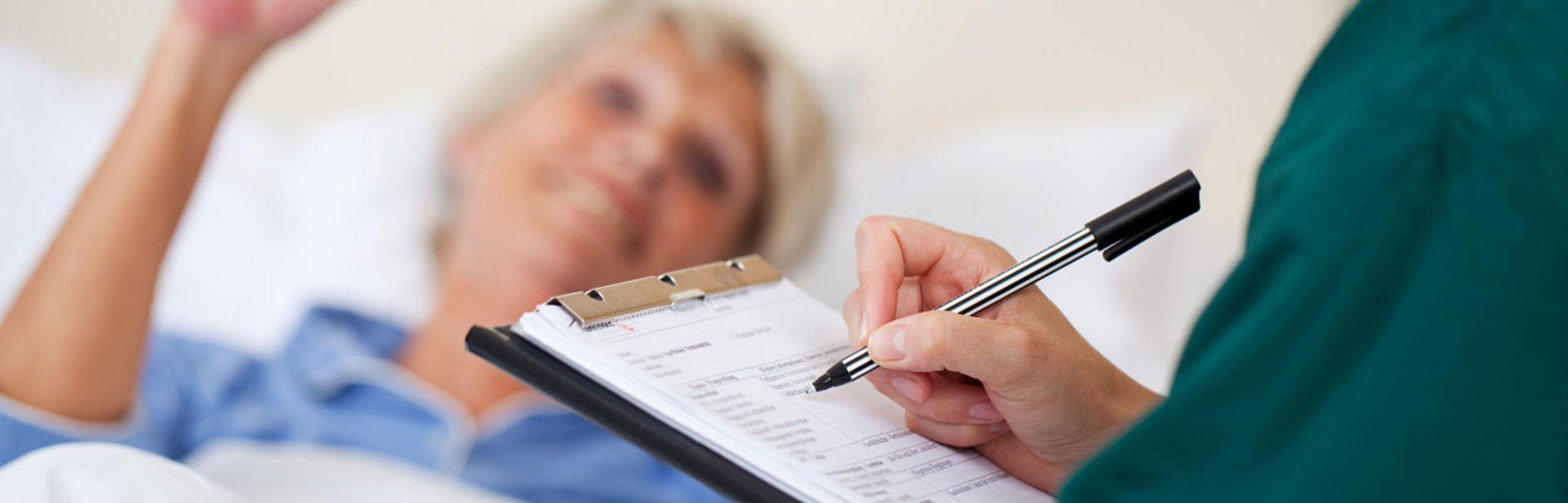
Airway suctioning is a critical procedure used across hospitals, clinics, and home-care settings to remove secretions and maintain airway patency. In recent years, sterile soft suction catheters have gained increasing attention due to their ability to improve patient comfort while maintaining strict infection-control standards. This guide provides an evidence-based overview of the materials, design features, and clinical use cases of soft suction catheters, grounded in recommendations from the CDC, WHO, and the American Association for Respiratory Care (AARC).
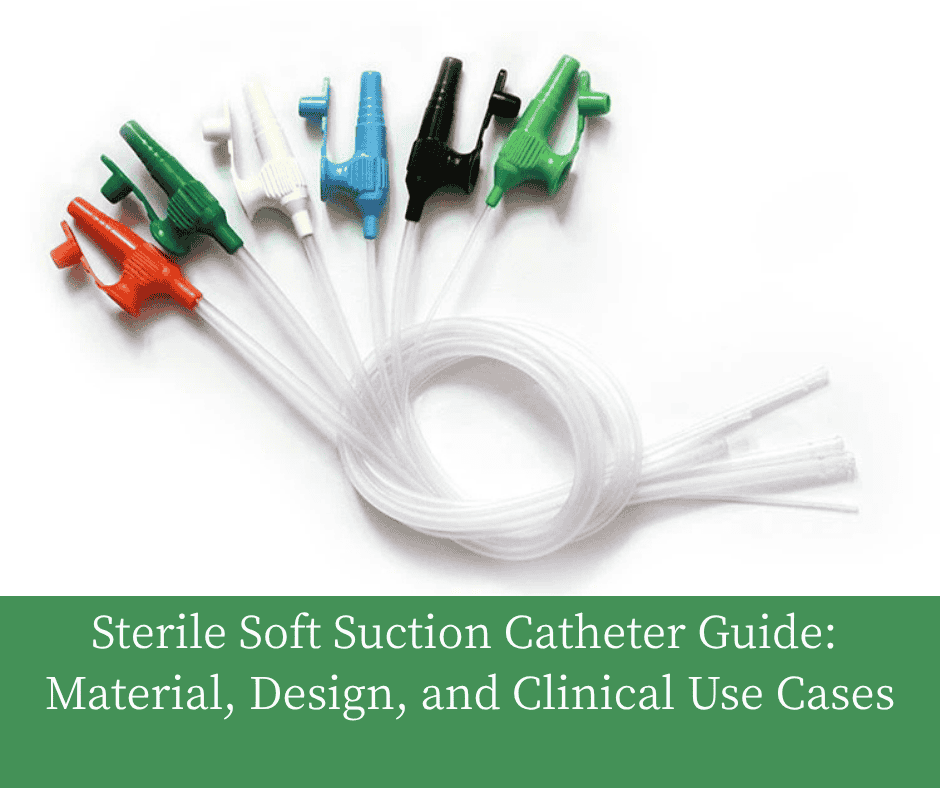
A soft suction catheter is a flexible, sterile device used to clear airway secretions through the nasal/oral route or via endotracheal and tracheostomy tubes. Compared with traditional firmer catheters, soft suction catheters are designed to:
AARC guidelines emphasize choosing the least traumatic catheter possible to reduce airway irritation and bleeding — one of the main reasons soft catheters are becoming the preferred choice in modern respiratory care.
Most soft suction catheters are made from DEHP-free medical-grade PVC. By adjusting the durometer (hardness level), manufacturers can produce a softer, more flexible catheter that maintains structural stability. Benefits include:
Some advanced designs incorporate silicone-enhanced blends or TPE for even greater softness. These materials are ideal for:
Clinical relevance: Research in airway management consistently shows that softer catheters reduce airway trauma, coughing, and bleeding — all critical in ICU, anesthesia, and emergency care environments.
CDC and AARC guidelines emphasize using atraumatic tips to minimize epithelial injury. High-quality soft catheters feature:
Multiple side holes improve suction efficiency and minimize blockage. They also help distribute negative pressure more evenly, reducing local tissue damage.
Color coding enables quick identification of French size — crucial in emergency and ICU settings.
WHO infection-control guidance clearly states that suction catheters must be single-use to prevent cross-contamination and ventilator-associated pneumonia (VAP).
Control valves allow clinicians to apply intermittent suction, reducing hypoxia and mucosal trauma.
Soft catheters reduce trauma, coughing, and bronchospasm, making them ideal for routine tracheostomy care.
Soft catheters minimize irritation around the ETT tip and reduce the risk of ventilator-associated complications.
Because soft catheters reduce discomfort and gag reflex, they are commonly used in:
Neonatal guidelines emphasize using the softest possible devices to avoid airway trauma. Soft suction catheters provide gentle, reliable suctioning for smaller, more sensitive airways.
For chronic patients (ALS, spinal injury, dysphagia), soft catheters enhance comfort and safety while reducing caregiver difficulty.
When choosing a sterile soft suction catheter, consider:
BEVER Medical is a trusted global manufacturer specializing in sterile suction catheters, respiratory consumables, and continence-care solutions. All products are developed and produced under ISO 13485-certified quality systems, with compliance to CE and FDA regulatory requirements.
BEVER Medical's soft suction catheters are made from DEHP-free medical-grade PVC, processed in controlled cleanroom environments, and validated to a Sterility Assurance Level of 10⁻⁶. Every catheter is designed for optimal comfort and clinical performance, featuring:
With proven OEM capabilities, BEVER Medical supports distributors, hospitals, and private-label brands with reliable supply chains, regulatory documentation, and customizable product specifications. From raw material selection to final packaging, BEVER is committed to advancing safer, more comfortable, and more efficient respiratory care solutions worldwide.
Copyright © Hangzhou BEVER Medical Devices Co., Ltd.
The information provided on this website is intended for use only in countries and jurisdictions outside of the People's Republic of China.


