


 Deutsch
Call Us
TEl: +86-13148388090
Fax:+86-571-88616515

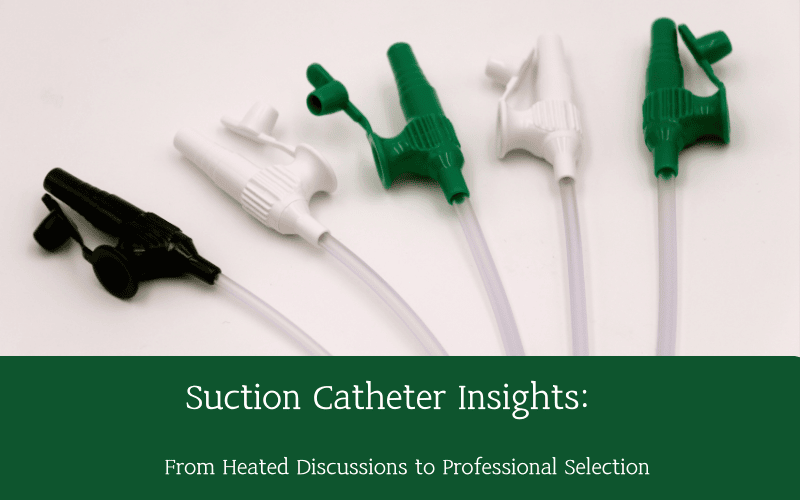
Recently on Reddit, several posts about suction catheters have sparked intense discussions. Questions such as “How deep should a suction catheter be inserted?” and “Which is safer and more effective: closed or open suction?” have drawn numerous healthcare professionals sharing experiences and differing opinions. These discussions are particularly heated because suctioning is not merely a routine task,it involves patient safety, operator skill, and device selection, all of which directly affect clinical outcomes.
With the increasing number of patients requiring tracheostomy care or mechanical ventilation, understanding the nuances of suction catheter selection and use has never been more critical.
Although suctioning may appear straightforward, the reality is more complex. Different approaches carry distinct risks:
These overlapping factors explain why suction catheters generate such passionate debate in professional communities. Many healthcare workers share personal experiences, highlighting complications, success stories, and tips, which contributes to the richness and intensity of the discussion.
Suction catheters are essential tools in airway management. Their primary purpose is to remove airway secretions, maintain a clear airway, and prevent pulmonary complications such as atelectasis or ventilator-associated pneumonia. Proper use can also reduce patient discomfort and improve oxygenation.
Airway management in ICU or intubated patients: Ensures ventilator efficacy and prevents secretion buildup.
Daily care for long-term tracheostomy patients: Helps maintain airway patency and prevents infection.
Supporting patients with thick secretions or weak cough reflex: Provides mechanical assistance to clear secretions that patients cannot remove independently.
By clearly understanding the catheter's function, clinicians can make informed decisions about suction depth, frequency, and technique, improving patient outcomes.
After understanding suctioning's purpose, the next factor is catheter material, which directly affects performance, safety, and patient comfort:
Selecting the appropriate material rubber for comfort, medical-grade PVC for efficiency is crucial to balancing patient safety, suction performance, and ease of use.
Material alone is not sufficient; catheter design features significantly influence usability and clinical outcomes:
Thoughtful design enhances patient safety, improves suction efficiency, and reduces procedural complications, particularly in high-risk or ICU settings.
To maximize patient safety and efficiency, clinicians should follow these evidence-based best practices:
Incorporating these best practices reduces complications and enhances overall care quality.
Suctioning requires careful decisions regarding depth, material, design, and technique. Based on clinical experience and professional community discussions, best practices include:
Among available options, BEVER Medical suction catheters provide professional-grade advantages:
For healthcare professionals seeking safe, efficient, and patient-friendly airway management, BEVER Medical suction catheters are a reliable, high-quality choice.
Copyright © Hangzhou BEVER Medical Devices Co., Ltd.
The information provided on this website is intended for use only in countries and jurisdictions outside of the People's Republic of China.


