


 Deutsch
Call Us
TEl: +86-13148388090
Fax:+86-571-88616515

A patient gasps for air. A newborn's first breath is hindered by fluid. In these critical moments, the airway is everything. The difference between a clear passage and a compromised one often comes down to a single, vital tool: the suction catheter. This is not a one-size-fits-all instrument. The wrong choice can mean wasted seconds, mucosal trauma, or ineffective clearing. For clinicians navigating the high-stakes environments from the delivery room to the emergency department, selecting the correct catheter is a basic and important skill.

Newborns need gentle suctioning. Here, a whistle tip suction catheter is ideal. Its rounded, smooth tip allows effective clearance of meconium or secretions without damaging delicate nasal and oral mucosa. Size selection (5F - 8F) is still important to maintain normal tidal volume and avoid hypoxia.
How to Use: Suction only while withdrawing the catheter, keeping the procedure brief—under 5 seconds. Pre-oxygenate if possible. The goal is clearing the oropharynx and tube to help the baby take that first critical breath.
Takeaway: For neonatal airways, precision and gentleness matter most. A whistle tip suction catheter ensures safe, effective airway clearance.
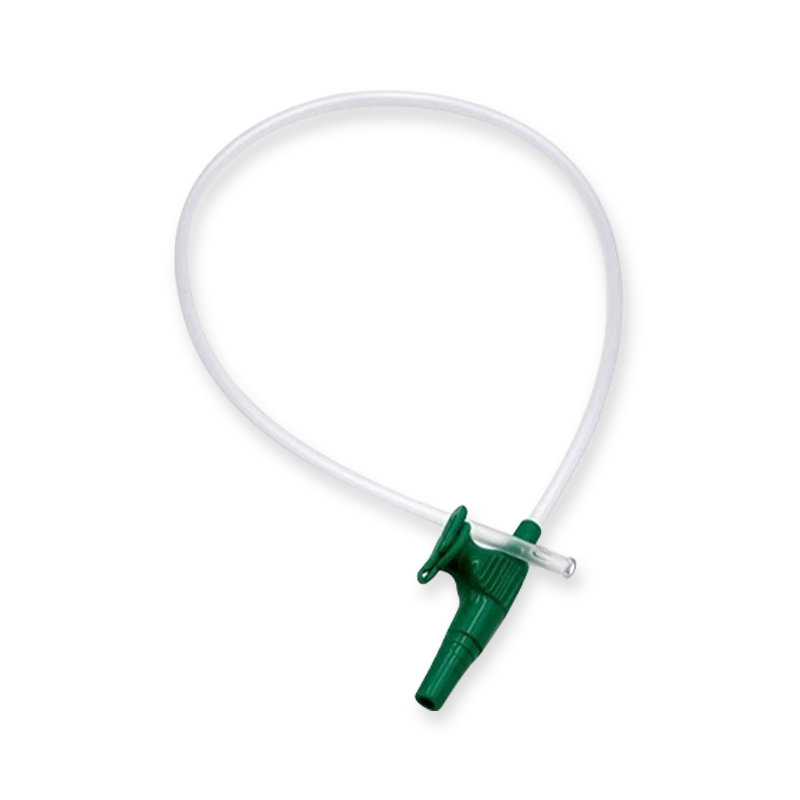
Patients on ventilators often require routine suctioning to prevent pneumonia. Using a suction catheter with chimney valve allows you to suction without disconnecting the ventilator, maintaining PEEP and protecting staff from aerosolized secretions. It's perfect for closed suction systems (14F–16F) and keeps the procedure efficient and safe.
For non-intubated patients: A flexible 14F catheter through the nares (nasopharyngeal suction) works well. Lubricate, choose the right length, and focus on comfort while clearing secretions.
Takeaway: On the ward or ICU, a suction catheter with chimney valve keeps the procedure safe, efficient, and comfortable for patients.

The ER is unpredictable. Trauma patients with blood in the airway, overdoses, or COPD patients with thick sputum all require fast, adaptable suctioning.
Your Options: Rigid Yankauer, Flexible Catheters, Coude-Tip Catheters
Takeaway: In the ER, having multiple catheter types ready ensures quick, safe, and effective airway management for any patient scenario.
Choosing the right type is one thing, but the quality of the catheter matters even more.
From gently suctioning a newborn to handling a high-adrenaline trauma airway, suction catheters are an extension of the clinician's skill. The right catheter reflects judgment, knowledge, and safety priorities.
For distributors or healthcare brands, this precision starts with manufacturing. You need a partner who understands these clinical nuances and can deliver scenario-specific solutions—from soft neonatal catheters to kink-resistant emergency catheters.
Looking for a reliable OEM partner? At BEVER Medical, we provide ISO Class 8 cleanroom manufacturing, FDA and CE compliance, and end-to-end services from design to sterile packaging. We specialize in flexible suction catheters and other airway devices to meet the needs of delivery rooms, wards, and emergency rooms. Contact us today to get the right tools for every critical moment.
Copyright © Hangzhou BEVER Medical Devices Co., Ltd.
The information provided on this website is intended for use only in countries and jurisdictions outside of the People's Republic of China.


