


 Deutsch
Call Us
TEl: +86-13148388090
Fax:+86-571-88616515

When a patient cannot maintain an open airway on their own, healthcare providers may use a nasopharyngeal airway (NPA), also named a Wendl tube, to help them breathe.
The soft and flexible tube can keep the upper airway open and allow air to pass freely to the lungs through the nose and into the nasopharynx. However, a small tube can not maintain airway patency, while one that is too large may cause injury. In this article, we have collected the complete size chart for your consideration and to help you determine the correct tube length and diameter.
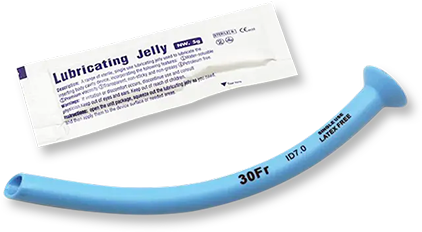
Generally, the nasopharyngeal tube is measured using the French gauge (Fr) system, which refers to the external diameter of the tube. Also, you may have noticed the color of the device. So, what's the purpose? Manufacturers often color-code the top flange of the device to allow healthcare providers to identify the size quickly in emergency situations.
Common sizes found in a standard clinical setting include:
The correlation between the internal diameter (ID) and the French gauge (Fr) is essential. For instance, a size 7.0mm ID tube typically corresponds to a 28 Fr or 30 Fr. Standardizing these measurements ensures that the device fits the nasal anatomy without causing excessive pressure on the septal mucosa.
The following chart provides a general reference for common nasopharyngeal airway sizes used in clinical practice.
|
Patient Category |
Typical ID (mm) |
French Gauge (Fr) |
Common Color Code |
|
Neonate / Infant |
2.5 – 3.5 |
10 – 14 |
Grey / White |
|
Toddler / Child |
4.0 – 5.0 |
16 – 20 |
Blue / Green |
|
Older Child |
5.5 – 6.0 |
22 – 24 |
Yellow |
|
Small Adult |
6.0 – 6.5 |
24 – 26 |
Green / Yellow |
|
Medium Adult |
7.0 – 7.5 |
28 – 30 |
Red |
|
Large Adult |
8.0 – 9.0 |
32 – 36 |
Orange / Brown |
Important: This chart is a general reference; clinicians must always assess the patient's anatomy before choosing the correct size.
Some products, such as the nasopharyngeal tube wendl, are designed with adjustable features that allow greater flexibility in airway management.
In emergency kits, healthcare providers may use a Wendl tube set, which contains several sizes to accommodate different patients.
Selecting the right size for an adult depends on both the length and the diameter. A tube that is too short will fail to bypass the tongue base, while a tube that is too long may enter the esophagus or irritate the epiglottis, potentially causing laryngospasm.
For the average adult male, a size 7.0mm to 8.0mm ID (28 Fr to 32 Fr) is typically appropriate. For the average adult female, a size 6.0mm to 7.0mm ID (24 Fr to 28 Fr) is generally the standard. However, clinicians must always assess the individual's physical stature rather than relying solely on gender. The nasopharyngeal tube Wendl is particularly favored in European and American hospitals for its soft, medical-grade material that adapts to adult nasal contours.
Pediatric and neonatal airways are much more delicate and narrow. Using an oversized nasopharyngeal tube size in an infant can lead to significant mucosal edema or necrosis.
Pediatric sizes usually range from 12 Fr to 20 Fr (approximately 2.5mm to 4.5mm ID). In neonates, the smallest available sizes are used to alleviate obstructions caused by conditions like Pierre Robin sequence or laryngomalacia. Due to the high risk of complications in small children, clinicians often prefer a wendl tube set that provides multiple size options, allowing for an immediate switch if the first choice does not offer a perfect fit.
The 3-3-2 rule is a rapid bedside assessment tool used to predict the ease of intubation:
3 (Mouth Opening): Can the patient fit three of their own fingers between their upper and lower incisors? This indicates adequate access to the oral cavity.
3 (Hyoid-Mental Distance): Whether the patient fits three fingers between the tip of the chin (mentum) and the hyoid bone? This helps assess the space available to displace the tongue.
2 (Thyrohyoid Distance): Can the patient fit two fingers between the hyoid bone and the thyroid notch? This identifies the location of the larynx relative to the base of the tongue.
If a patient fails the 3-3-2 assessment, they are considered a "difficult airway." In such cases, using a nasopharyngeal airway can be a life-saving "bridge" to maintain oxygenation while specialized equipment or personnel are summoned.
A commonly recommended method is to measure the distance from the patient's nostril to the earlobe or the angle of the jaw. This external measurement provides a good estimate of the appropriate tube length.
Research published in airway management literature suggests that the correct length corresponds closely to this anatomical measurement.
The general sizing steps include:
Clinicians may also apply water-soluble lubricant to the tube before insertion to reduce friction and improve comfort.
Proper sizing helps prevent complications such as:
Nasopharyngeal airway insertion is a relatively quick procedure performed in emergency or clinical settings. It usually includes the following steps:
Because the insertion technique is important for safety, detailed step-by-step instructions are usually covered in specialized airway training materials.
Readers who want a more detailed explanation can refer to the full guide on nasopharyngeal airway insertion available in our related airway care resources.
Partner with BEVER Medical for high-quality nasopharyngeal airways.
We design and manufacture nasopharyngeal airway tube in a comprehensive range of sizes to meet the needs of neonatal, pediatric, and adult patients.
Medical professionals rely on our products for airway management in emergency medicine, anesthesia, and critical care. We support global distributors with OEM manufacturing, consistent product quality, and dependable supply.
As an important medical device, whether an NPA is used in an emergency room, a post-operative recovery suite, or a home-care environment, one of its successes depends on selecting the correct size. By using a nasopharyngeal Wendl tube and following the standardized sizing charts, the patient's risk of local trauma is minimized. Besides, please always use medical and safe products for your patients. Final words, before you make a decision, knowing the unique anatomy of each patient is the final guide for any airway intervention.
Copyright © Hangzhou BEVER Medical Devices Co., Ltd.
The information provided on this website is intended for use only in countries and jurisdictions outside of the People's Republic of China.


