


 Deutsch
Call Us
TEl: +86-13148388090
Fax:+86-571-88616515

A Ready-to-Use hydrophilic intermittent catheter is a single-use catheter designed to help drain the bladder during intermittent catheterization. Compared with conventional hydrophilic catheters that may require additional preparation before use, Ready-to-Use products are designed to simplify the process.
For hospitals, clinics, rehabilitation centers, home healthcare providers, medical device companies, and distributors, choosing an intermittent catheter involves more than the catheter itself. Material, coating, catheter length, size, tip design, eyelets, protective features, and packaging can all be important considerations.

A hydrophilic intermittent catheter is a single-use catheter used to empty the bladder when a person can't urinate adequately on their own. Its surface is coated with a hydrophilic layer that becomes smooth and lubricious when prepared according to the manufacturer's instructions.
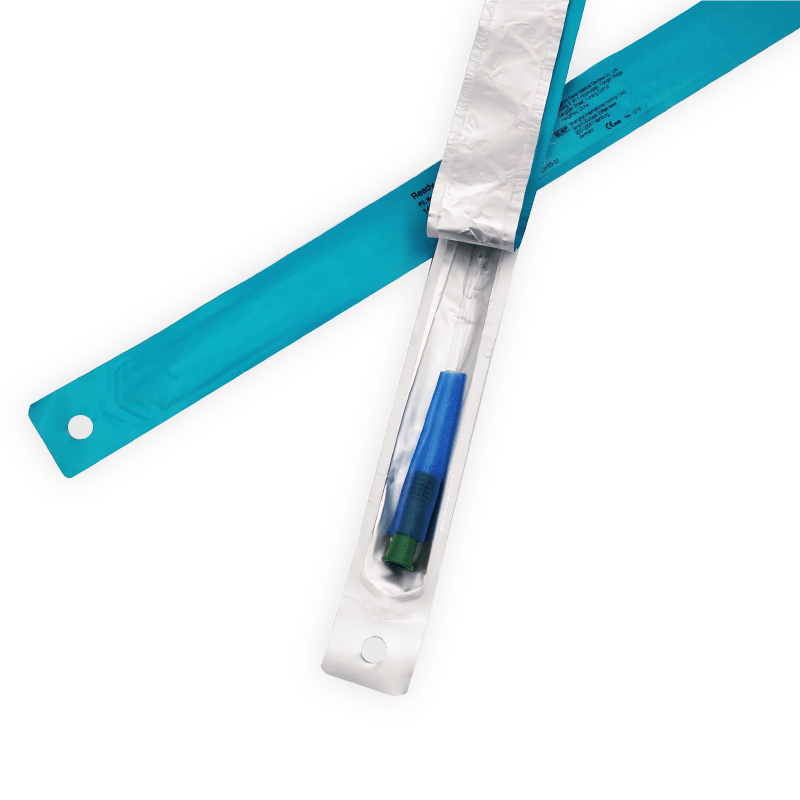
A Ready-to-Use Hydrophilic Intermittent Catheter is designed to reduce the preparation required before catheterization. Unlike some hydrophilic catheters that require water activation or separate lubricant, the Ready-to-Use format comes prepared for use according to the instructions for use.
In simple terms, the main difference is how the catheter is prepared before use, rather than what the catheter is designed to do.
Intermittent catheterization may be recommended for people who can't empty their bladder adequately or who need a structured bladder management routine. The appropriate catheter and catheterization method depend on the individual's condition and should be determined by a healthcare professional.
Urinary Retention or Incomplete Bladder Emptying
People with difficulty urinating, significant residual urine after voiding, or an inability to empty the bladder completely may require intermittent catheterization as part of their bladder management.
Neurogenic Bladder
Conditions such as spinal cord injury, spina bifida, and multiple sclerosis can affect the nerves that control bladder function. When the bladder cannot be emptied effectively, intermittent catheterization may be used as part of ongoing bladder management.
Reduced Bladder Contractility
Some people have reduced detrusor muscle activity, making it difficult for the bladder to contract and empty properly. This may result in difficulty urinating, residual urine, or incomplete bladder emptying.
Bladder Outlet Obstruction
Conditions such as benign prostatic hyperplasia (BPH) and urethral stricture can interfere with normal urine flow. If the bladder cannot empty adequately as a result, intermittent catheterization may be considered following clinical assessment.
Urinary Incontinence Associated with Incomplete Emptying
Urinary incontinence alone does not mean that intermittent catheterization is needed. However, when incomplete bladder emptying leads to overflow incontinence, intermittent catheterization may be part of the overall bladder management plan.
Temporary Urinary Retention After Surgery
Some patients experience temporary difficulty urinating or urinary retention after urological, prostate, or pelvic surgery. Intermittent catheterization may be used during recovery when recommended by a healthcare professional.
Catheter length and size may vary depending on the user's anatomy and clinical needs. For example, male intermittent catheters are generally longer to accommodate the male urethra. BEVER Medical's Ready-to-Use hydrophilic intermittent catheter for men is 40 cm long and available in 8Fr–18Fr sizes.
Ready-to-Use hydrophilic intermittent catheters may be used in hospitals, clinics, rehabilitation settings, home healthcare, and long-term care.
For trained users who perform intermittent catheterization at home, a Ready-to-Use format can simplify the preparation required before each catheterization. In healthcare settings, the same product format can also be used by trained healthcare professionals as part of routine bladder management.
The key consideration is not simply where the catheter is used, but how it is prepared and handled. Features such as single-use packaging, a protective sleeve, and different catheter sizes can be selected according to the needs of the intended users.
BEVER Medical's Ready-to-Use hydrophilic intermittent catheter for men is made from PVC-free material and combines flexibility with sufficient rigidity for handling. The catheter shaft features a hydrophilic coating.
Key design features include:
Together, these features define the product's overall design and configuration.
The main difference with a Ready-to-Use hydrophilic intermittent catheter is the simplified preparation. Compared with some hydrophilic catheters that require water activation or a separate lubricant, a Ready-to-Use product is supplied in a format that requires fewer preparation steps before use.
For B2B buyers, Ready-to-Use is also a product option that can be considered alongside size, material, packaging, labeling, and branding when developing a urinary care product range.
When sourcing Ready-to-Use hydrophilic intermittent catheters, medical device companies, distributors, healthcare providers, and home healthcare suppliers may consider several factors:
Catheter Specifications
Catheter length and French size should be appropriate for the intended users and market. Different user groups may require different catheter configurations.
Materials and Design
Material selection, hydrophilic coating, tip design, eyelets, and protective features can all affect the overall product specification.
Packaging and Labeling
Packaging format, size identification, labeling, and product documentation should meet the requirements of the target market.
Product Portfolio
A Ready-to-Use hydrophilic intermittent catheter can be offered alongside other intermittent catheter products as part of a broader urinary care portfolio.
Manufacturing and Supply
For ongoing procurement, buyers may also evaluate manufacturing consistency, packaging capabilities, production capacity, and supply reliability.
BEVER Medical is a medical device manufacturer specializing in intermittent and hydrophilic catheter products. We also provide OEM and Private Label manufacturing for medical device companies, healthcare brands, and distributors.
OEM projects can be developed around product specifications, materials, packaging, labeling, and branding requirements.
For companies looking to expand their urinary care portfolio, BEVER Medical can provide manufacturing and supply support for Ready-to-Use hydrophilic intermittent catheters and other catheter products.
To discuss product specifications, packaging options, or OEM requirements, contact BEVER Medical.
Copyright © Hangzhou BEVER Medical Devices Co., Ltd.
The information provided on this website is intended for use only in countries and jurisdictions outside of the People's Republic of China.


