


 Deutsch
Call Us
TEl: +86-13148388090
Fax:+86-571-88616515

It's dangerous for patients who cannot effectively cough or clear mucus for a long time. Healthcare providers should take quick measures. In this situation, suction devices are one of the useful devices for removing secretions. This tool can greatly enhance patient comfort and breathing efficiency. There are two types of suction catheters, open and closed ones. In this article, we focus on the open suction catheter.
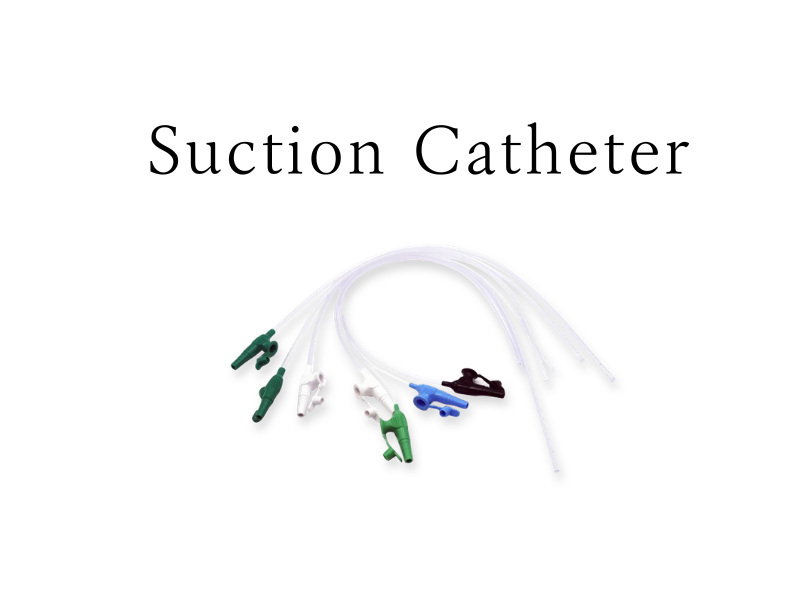
An open suction catheter is a thin, flexible, sterile tube designed to remove secretions from the airway. It connects to suction tubing and a vacuum source that pulls fluids into a collection container.
The catheter is typically made from soft medical-grade plastic that allows it to bend easily while being inserted into the airway. Each catheter is sterile and intended for single use to reduce the risk of infection.
Open suction catheters are commonly used in:
The catheter is inserted through an endotracheal tube, tracheostomy tube, or sometimes the nose or mouth to reach the airway where secretions collect.
Most open suction catheters include several important parts:
Some models, such as the suction catheter with fingertip control, allow caregivers to control suction by covering a small opening with a finger. This enables intermittent suction and helps prevent excessive pressure.
Another example is the Graduated suction catheter, which includes measurement markings along the tube. These markings help clinicians estimate how deep the catheter has been inserted.
Open suctioning removes secretions using negative pressure from a suction machine.
During the procedure, a sterile catheter is inserted into the airway. When suction is applied, mucus and other fluids are drawn through the catheter and into a collection container.
Healthcare providers usually follow several basic steps:
This technique allows secretions to be removed while reducing irritation to the airway lining.
Each suction attempt typically lasts 10 to 15 seconds to avoid reducing oxygen levels in the patient.
Open suctioning remains widely used in clinical practice because it is simple and effective. Although closed suction systems are common in intensive care units, open suction catheters still play an important role in respiratory care.
Open suctioning requires only basic equipment:
Because the setup is straightforward, the procedure can be performed quickly in many clinical settings.
Open suction catheters are disposable and relatively inexpensive compared with some closed suction systems. This makes them widely available in hospitals and care facilities.
Open suctioning provides direct access to the airway. This allows clinicians to remove mucus or fluid effectively.
Clearing secretions can:
Open suction catheters can be used in many healthcare environments, including emergency care and home respiratory support.
This video demonstrates airway suctioning techniques commonly taught in nursing education.
Open suction catheters are used when patients cannot remove airway secretions on their own.
In healthy individuals, coughing clears mucus naturally. However, certain medical conditions may weaken the cough reflex or increase mucus production.
Patients receiving mechanical ventilation are unable to cough normally because of the breathing tube. Suctioning helps remove mucus and keeps the airway clear.
Patients with a tracheostomy often need regular suctioning. Secretions can accumulate inside the tracheostomy tube and block airflow.
Conditions such as pneumonia or bronchitis can produce large amounts of mucus. When the patient cannot cough effectively, suctioning may be necessary.
Diseases that affect muscle strength can weaken the ability to cough. Examples include:
In these cases, suctioning helps maintain airway hygiene and breathing.
In emergency situations, secretions, blood, or vomit may obstruct the airway. Suctioning is often used to clear the airway before further treatment.
This training video illustrates safe suctioning techniques and common precautions used in clinical practice.
Many suction catheters include a small opening called a control port or thumb port. This opening allows clinicians to control when suction pressure is applied.
Pro tips to insert:
Applying suction during insertion can irritate airway tissues and increase the risk of injury. Therefore, suction is generally applied only during catheter withdrawal.
Open suction catheters play a vital role for patients who cannot effectively clear secretions on their own. Before using, one must know the difference between closed and open suction catheters. While open suctioning is simple to use, please also follow safety guidelines to minimize risks and ensure patient well-being.
For hospital buyers, ICU managers, and medical distributors, open suction catheters are also an essential part of respiratory care consumable supply. When selecting products for clinical use, healthcare institutions typically focus on infection control performance, sterility assurance, ease of use, and cost efficiency for high-frequency suction procedures. Reliable bulk supply, CE/ISO compliance, and consistent manufacturing quality are also key considerations in hospital procurement and distribution planning.
To support these requirements, BEVER Medical provides OEM and private label supply for global healthcare partners.
Copyright © Hangzhou BEVER Medical Devices Co., Ltd.
The information provided on this website is intended for use only in countries and jurisdictions outside of the People's Republic of China.


