


 Deutsch
Call Us
TEl: +86-13148388090
Fax:+86-571-88616515
During clinical catheterization, patients often experience discomfort or even pain. Traditional catheters, with their higher surface friction, can cause urethral trauma and increase the risk of urinary tract infections. This not only affects patient experience but also adds to the workload of healthcare staff and hospital management. To address these challenges, hydrophilic-coated catheters have emerged as a major innovation in medical consumables, offering patients a safer and more comfortable catheterization experience.
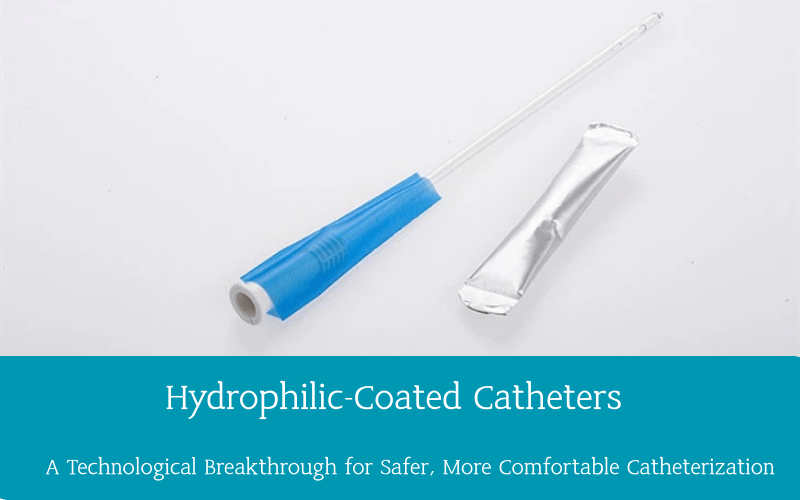
Hydrophilic coatings are specialized functional layers that rapidly absorb water and form a smooth lubricating film on the catheter surface. This water layer significantly reduces friction between the catheter and the urethra, enhancing patient comfort while inhibiting bacterial adhesion and reducing the risk of urinary tract infections.
In terms of production, hydrophilic coatings are typically applied through chemical grafting, physical adsorption, or composite coating technologies. These methods ensure that the coating remains stable, durable, and safe for clinical use. Key benefits include:
Hydrophilic coated catheters are suitable for a wide range of clinical catheterization needs, including intermittent or long-term catheterization for both male and female patients. Common application scenarios include:
Compared with traditional catheters, hydrophilic-coated catheters are ready-to-use, reducing the steps required for healthcare staff and lowering operational burden, while significantly improving patient comfort and satisfaction.
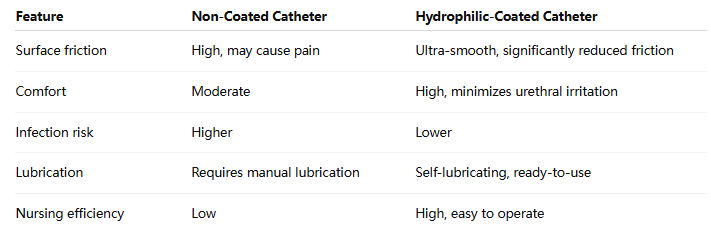
As the table shows, hydrophilic-coated catheters offer clear advantages in patient comfort, ease of use, and clinical safety.
Our R&D team has developed stable, durable, and environmentally safe hydrophilic-coated catheters through years of material innovation. Clinical studies show that, compared to traditional catheters, patients using hydrophilic-coated catheters report a 60% reduction in discomfort, along with a significant decrease in urinary tract infection rates. Additionally, nursing operations become more efficient, benefiting both hospitals and home care settings.
This technological breakthrough demonstrates our professional expertise in medical device development and reflects our commitment to improving patient quality of life through innovation.
Hydrophilic-coated catheters reduce friction, enhance comfort, and inhibit bacterial adhesion, providing patients with a safer and more comfortable experience. At the same time, they offer healthcare staff a more convenient and efficient operation. Choosing hydrophilic-coated catheters means selecting high-quality medical products while ensuring patient health and improving caregiving efficiency.
Copyright © Hangzhou BEVER Medical Devices Co., Ltd.
The information provided on this website is intended for use only in countries and jurisdictions outside of the People's Republic of China.


