


 Deutsch
Call Us
TEl: +86-13148388090
Fax:+86-571-88616515
People using catheterization for the first time are usually filled with fear; actually, the first time is only to make them feel discomfort. If you feel pain during insertion, this is a signal from your body. The pain may be due to issues with the size, material, or technique used, or it could be a urinary tract infection. There are expert tips in this article that can help you have a pain-free catheterization process.
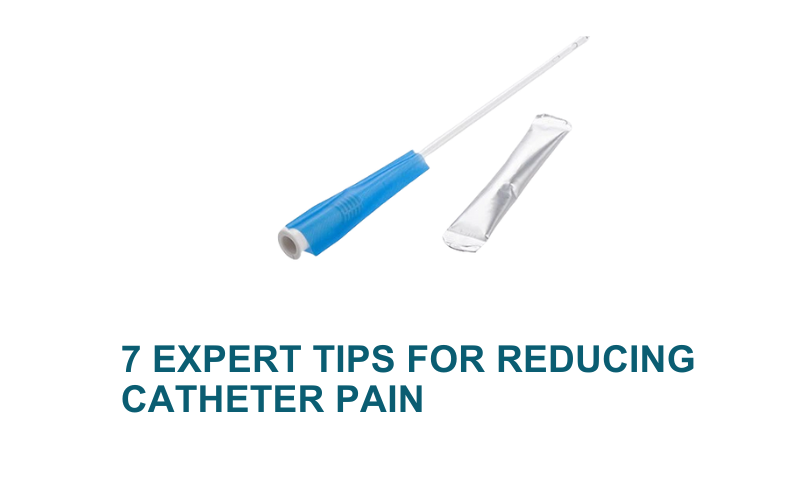
Self-catheterizing incorrectly is not the only one reason cause you pain; both the wrong size and the wrong type are the culprits. To catheter right, you should practice more and easier. Besides, ask your healthcare provider for professional advice on the intermittent catheters.
Reducing catheter pain involves matching the intermittent catheter to the patient and use case. The wrong size or tough material can cause burning, pressure, or bleeding. Please ask your clinician for the right French size and length for male, female, or pediatric use.
If a straight catheter causes too much pain or gets stuck, you may need a different tip. Straight tips are for most standard urethras. And a coudé or curved tip has a slightly curved tip. They help the catheter go around blockages like an enlarged prostate or scar tissue. It is commonly used by men who self-catheterize due to conditions like urinary retention or urinary incontinence, especially when straight tips are difficult to insert.
Also, check your French size. This is the diameter of the tube. If the tube is too big, it will stretch your urethra and hurt. Your doctor can help you find the perfect size for your body.
Friction is a major cause of pain during insertion. If you use a standard uncoated intermittent catheter, you must use lubricating jelly. This jelly helps the tube slide in and out without tugging on your skin.
Pay attention, some people need a lot of lubricant, while others need only a little. You can also try other options:
Hydrophilic intermittent catheters: These have a special coating that becomes slippery when wet.
Pre-lubricated intermittent catheters: When you use them, you don't have to mess with messy gel packets.
Even if you're using the best catheters, being nervous and technique will make your muscles tight. Tight muscles make it very hard to insert the catheter. Before you start, take deep breaths to calm your body. Besides, rushing can lead to injuries or bleeding. Find a position that you're comfortable with, such as sitting on the toilet or standing with one leg up.
If you feel resistance, stop and try to relax before moving forward. For men, keep the penis gently straight or slightly raised; for women, clear visualization and correct urethral location are key. Importantly, allow the bladder to empty fully before removal and withdraw slowly to avoid spasms and irritation.
Nurses report that clear teaching, home‑based training when possible, and time to practice greatly reduce anxiety and perceived catheter pain.
Device design can directly lower the risk of puncture, abrasion, and high negative pressure — all common causes of catheter pain.
Features that help:
Soft, rounded, or flanged tips enlarge the contact area and reduce the chance of puncture in delicate tissue.
Smooth, staggered side eyelets improve urine flow and minimize scraping along the urethral wall.
Multiple small suction holes instead of one large port can spread the suction force and protect the mucosa in the airway or suction catheters.
For example, a suction catheter with a flanged tip and two tiny holes spreads pressure and reduces puncture risk while still clearing secretions. Similar principles apply to urinary catheters used in emergency and military settings, where fast yet safe insertion is critical.
Persistent catheter pain may mean infection, wrong catheter type, bladder spasms, or urethral injury. You should pay attention to the following signals:
In these cases, clinicians may:
For facilities and OEM buyers, this is a strong reason to work with a supplier who offers a full catalog of intermittent catheters and can customize design to patient groups and clinical feedback.
In emergency rooms, ambulances, and combat care, there is little time, but catheter pain and trauma still matter. Rough insertion under stress can cause long‑term problems. We suggest using robust yet flexible PVC catheters with clear size markings and kink‑resistant shafts.
For female patients, having a ready-to-use catheter set for women can further improve efficiency and safety by providing all essential components in a sterile, organized format—helping caregivers work quickly while reducing the risk of contamination.
Hygiene is very important. Always wash your hands before touching your medical supplies. Infections like CAUTI (catheter-associated urinary tract infection) are a big reason for pain. For women in particular, using single-use catheters for women can significantly reduce the risk of contamination and infection by eliminating the need for cleaning and reuse.
Also, drink plenty of water. Water keeps your urinary system healthy and flushes out bacteria. It also helps prevent irritation and inflammation in your bladder, making catheterization more comfortable.
Don't ignore the pain signals from your body. Through the right intermittent catheter, the insertion technique, and good hygiene habits, you can enjoy using an intermittent catheter. If you're looking for safe and quality catheter solutions, contact your reliable supplier, Bever Medical. We supply intermittent catheters for women and men with OEM services.
Copyright © Hangzhou BEVER Medical Devices Co., Ltd.
The information provided on this website is intended for use only in countries and jurisdictions outside of the People's Republic of China.


