


 Deutsch
Call Us
TEl: +86-13148388090
Fax:+86-571-88616515

The trumpet airway, also known as a nasopharyngeal airway, is a fundamental tool for maintaining upper airway patency. Despite its simple structure, effective use requires attention to sizing, technique, and ongoing assessment. This comprehensive guide explains how to use a trumpet airway with a focus on real-world application, common pitfalls, and practical decision-making.
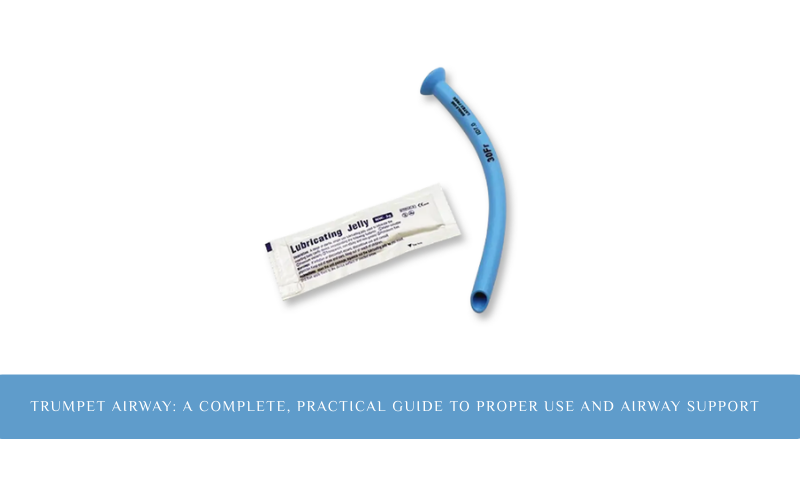
A trumpet airway works by bypassing soft tissue obstruction in the upper airway. When muscle tone decreases, the tongue and surrounding tissues may collapse backward, partially blocking airflow. The curved design of the trumpet airway creates a clear channel from the nostril to the nasopharynx, helping maintain continuous airflow without requiring mouth opening.
Because it follows the natural nasal anatomy, the trumpet airway is often better tolerated than rigid oral devices, especially in situations where patient cooperation varies or jaw access is limited.
A trumpet airway may be considered when upper airway obstruction is suspected and basic positioning alone is insufficient. It is particularly useful when oral airways are poorly tolerated or impractical.
The device also supports airway hygiene by providing a direct path for suctioning secretions. In many settings, this dual function—airflow support and secretion management—adds to its practical value.
Most trumpet airways are manufactured from soft PVC or silicone materials. Flexibility is essential, as rigid tubing increases discomfort and risk of nasal irritation. The flared proximal end serves as a depth stop, preventing over-insertion while allowing secure positioning at the nostril.
Smooth internal and external surfaces are critical. Even minor surface irregularities can increase friction during insertion or complicate suctioning.
Proper size selection is the foundation of effective trumpet airway use. Both length and internal diameter must be considered.
Length is typically estimated by measuring from the tip of the nose to the angle of the jaw. This approximation helps ensure the distal end reaches the appropriate depth without extending too far. Diameter selection should balance airflow capacity with patient comfort. Excessive diameter may cause resistance during insertion, while insufficient diameter may limit airflow.
When two sizes appear suitable, choosing the smaller option often improves tolerance while still providing adequate airway support.
Adequate preparation significantly reduces complications. The trumpet airway should always be lubricated with a water-soluble lubricant. This step minimizes friction and protects the nasal mucosa during insertion.
Before use, inspect the airway for defects, sharp edges, or stiffness. A flexible, smooth airway is far easier to place and maintain.
Insertion should be gentle and controlled. The airway is introduced into the nostril while following the natural curve of the nasal passage. Advancing along the nasal floor rather than upward reduces resistance and discomfort.
If resistance is encountered, withdrawal and slight repositioning is preferable to force. In many cases, switching to the opposite nostril resolves the issue entirely.
Correct placement is achieved when the flared end rests comfortably against the nostril opening. Over-insertion does not improve airflow and may reduce patient tolerance.
Placement should always be followed by reassessment. Improved airflow, reduced breathing effort, and easier secretion clearance indicate effective positioning.
The trumpet airway also facilitates suctioning. Smooth passage of a suction catheter suggests proper alignment and sufficient internal diameter.
A trumpet airway requires regular monitoring. It should be checked for patency, displacement, and comfort. Secretions may accumulate over time, and periodic suctioning may be necessary to maintain airflow.
Any change in breathing pattern, increased noise, or discomfort should prompt reassessment of size or position.
Several avoidable mistakes reduce the effectiveness of trumpet airway use. Selecting an oversized airway is one of the most frequent issues, leading to resistance and irritation. Insufficient lubrication is another common problem that increases the risk of nasal trauma.
Forcing the airway against resistance often results in nosebleeds and poor positioning. Gentle technique and patience are more effective than speed.
When the trumpet airway is no longer required, removal should be slow and deliberate. Abrupt removal may irritate the nasal passage.
After removal, inspect for minor bleeding or irritation. Most trumpet airways are intended for single use and should be discarded according to applicable guidelines. Reusable models must be cleaned and processed following manufacturer instructions.
The trumpet airway remains popular because it combines simplicity with effectiveness. It requires minimal equipment, can be placed quickly with proper technique, and supports both airflow and suctioning.
Its adaptability to different anatomical conditions makes it a reliable option across a wide range of airway management situations.
Using a trumpet airway correctly depends on thoughtful size selection, proper lubrication, gentle insertion, and ongoing observation. When these principles are followed, the device provides reliable airway support with minimal discomfort.
The trumpet airway is a valuable component of basic airway management. Though simple in design, its effectiveness is closely tied to correct use. By understanding real-world technique and avoiding common mistakes, users can achieve consistent and dependable airway support with a nasopharyngeal airway.
Copyright © Hangzhou BEVER Medical Devices Co., Ltd.
The information provided on this website is intended for use only in countries and jurisdictions outside of the People's Republic of China.


